From Parlour Clubs to Shared Interests Online
Learn how online clubs can keep the welcoming rituals of parlour gatherings while making it easier for members to join, contribute, and follow the conversation.

The most common mistake when moving a club online is to treat the screen as a room with a different door. The cost is easy to miss: newcomers may not know how to join in, and regulars can lose the small rituals that made the gathering feel familiar. A parlour and a video call are different settings, but both need a clear welcome and a shared reason to meet.
Consider an invented club, the Lantern Circle, whose members discuss illustrated travel diaries. Its organizer, Mara, has been hosting monthly gatherings in a borrowed sitting room. When that space is no longer available, she sets up a private group for notices and schedules a video call. The practical challenge is not to copy the sitting room on-screen; it is to make the club's purpose and habits understandable in its new setting.
A familiar place helps people understand the club
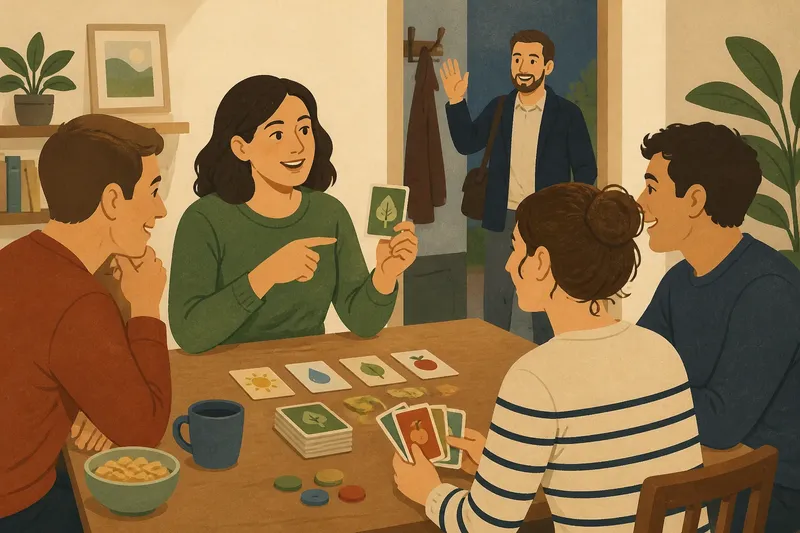
At the imagined parlour gathering, members arrive at different times. Someone pours tea; another asks after a familiar face. An open diary gives people something to discuss before the formal conversation begins. For a newcomer, these ordinary cues can answer useful questions: Is this the right place? How do people take part? What is the group here to do?
A club's surroundings can help establish its identity, but the setting alone does not explain how membership works. A host can make that clearer by introducing visitors, naming the shared subject, and explaining how the conversation flows. In the Lantern Circle, Mara's welcome is part of the gathering, not a separate speech. She invites a member to describe a diary on the table, giving everyone a starting point.
A room can also be comfortable for regulars yet awkward for someone who does not know the host. An online space has its own uncertainties: a new member may not know whether to post, join a call, or wait for an invitation. In either setting, a short explanation and a personal welcome can make the expectations easier to read.
An online club needs a host as much as a platform
For the invented Lantern Circle, Mara uses a private group for announcements and a video call for the monthly discussion. This separates practical details from the conversation itself. A calendar invitation can carry the time and joining link; a shared folder can hold material the group has permission to share. Keeping the setup simple makes it easier for members to find what they need.
Online access can remove the need to travel, but it can also bring missed messages, uneven internet connections, camera discomfort, or people speaking at once. A host helps members understand what to expect: how to enter the call, how to ask for a turn, and what alternatives are available if they would rather not speak on camera.
Mara keeps the Circle's greeting and adapts it for video. She welcomes each person by name, then invites everyone to share one detail from a diary they brought or selected. Members can pass, speak briefly, or use the chat. The opening gives late arrivals a quick sense of the topic and offers quieter members a turn before the discussion gathers speed.
Say a member joins the Lantern Circle call from a phone and cannot comfortably show a book to the camera. Mara invites that person to describe one illustration instead. The member can contribute without changing devices, and the rest of the group still has a shared detail to discuss. The adjustment preserves the activity's purpose without requiring everyone to participate in the same way.
Keep the purpose of a ritual, not just its form
The Lantern Circle's recurring feature is “the page on the table.” In the sitting room, a member brings a diary to show. Online, that member might describe a page, hold up a book, or share an image the group has permission to use. What matters is the invitation to look closely at something together, not the furniture or the exact format.
A group can choose a few reliable habits rather than writing a long rulebook. For each one, the host can check whether members understand it and then adjust the arrangement if they do not:
- Check whether a newcomer can find the welcome post; if they can, keep it pinned, but if they cannot, add a clearer “start here” note.
- Check whether the meeting invitation includes the time and joining link; if both are easy to find, keep using it, but if either is missing, update the invitation before the next call.
- Check whether members know how to take a turn; if they do, retain the agreed cue, but if they talk over one another, introduce a simple hand-raise or chat signal.
- Check whether camera-free participation is explained; if it is, keep that option visible, but if members seem unsure, state that listening or typing is welcome.
- Check whether the shared subject is named at the start; if conversation stays connected to it, keep the opening prompt, but if the group loses focus, restate the subject before the next topic.
- Check whether the closing message names the next gathering or activity; if it does, leave the routine in place, but if members are unsure what happens next, add the next date or topic to the group notice.
These are checks on whether the club's habits are legible, not measures of how much members care. A quiet message channel does not necessarily mean the group is faltering, and a busy one does not necessarily mean everyone has had room to speak. A focused gathering can be more useful than a stream of updates that asks members to stay constantly available.
Set boundaries that protect the shared subject
A club built around a shared interest needs room for that interest. In person, a host might bring the conversation back to the diaries when it wanders. Online, the group can keep practical notices separate from discussion and agree on a gentle way to handle unrelated links. The point is to keep the subject easy to find, not to police every exchange.
Imagine that, in the invented Circle, one enthusiastic member posts travel links throughout the week. Mara creates a single thread for optional recommendations and explains that the monthly call will stay centered on illustrated diaries. The member still has a place to share links, while the main discussion remains easier to follow. If the thread becomes distracting, Mara can invite members to share links only when they connect to the meeting's chosen diary.
Privacy deserves the same plain treatment. Mara asks before saving or sharing images and keeps the meeting link within the membership group. If the club wants to take notes, members can agree what those notes include and where they will be shared. A group's expectations should work alongside the platform's privacy settings, not replace them.
How can an online club keep its parlour traditions?
Does an online club need a video call?
No. Video works for groups that enjoy face-to-face conversation, while a forum, email thread, or scheduled audio chat may suit others better. Choose a format that supports the activity and feels manageable for members.
How can a newcomer join without feeling lost?
Offer a short welcome that explains the club's purpose, how to find the next gathering, and one easy way to contribute. A named contact or a pinned “start here” post can answer practical questions before the newcomer has to ask.
Should a club copy every parlour ritual online?
No. Keep the ritual's purpose rather than reproducing its physical form. A book on the table might become a description, a permitted image, or a member's chosen passage.
How can members keep online conversation from becoming noisy?
Separate practical announcements from the main discussion and agree on a simple way to take turns. Members can also treat replies as optional, leaving room for people who prefer a quieter presence.
Continuity comes from recognizable habits
In the invented Lantern Circle, moving online does not mean recreating the sitting room on a screen. The club keeps a host who notices arrivals, a shared subject, a way for members to contribute, and a closing cue that signals the gathering is over. Its private group handles logistics, while the scheduled call gives conversation a dedicated home.
The change also lets Mara make participation options clearer. One member can join from home rather than travel; another can read agreed-upon notes instead of appearing on camera. Neither needs to take part in precisely the same way as the most talkative regular to remain connected to the club.
For a club considering its own move, the search phrase online clubs points to a simple question: which part of the gathering helps members feel included? Name that habit, then choose a manageable online form that preserves its purpose. A clear welcome and a familiar shared activity can make the new meeting place easier to enter, even when it looks nothing like the old room.